Mysore to Tranquilandia
Posted on December 25, 2019 Leave a Comment
Today we drove a little over 200km and saw something of rural India. While we in the West are, or appear to be, horrified by the levels of poverty in India, while visiting there is nothing to be done about it except pay tourist rather than local prices. India is extreme in terms of how wealth sits side by side with poverty. One house might be magnificent, newly built, brightly painted, with large garden walls and big gates, and next to it there are rows upon rows of hovels, where many people live and often also work. As a child I built dens in my garden. My favourites were brick built, with a tin or asbestos roof, and an old curtain for a door, with a fire burning at the entrance cooking potatoes or bacon. Except for the bacon, many of the houses here are like my brick dens.
We passed hundreds of small businesses being run by people living in poverty, many tea shops, places selling plastic drinks (you know, coke and all that), repairing bikes, mending punctures, and so on. There were also many people, particularly men, who just appeared to be sitting doing nothing, a subject I may return to when I am feeling controversial.
We have only been in India for a few days, and the food is very good, but already I am getting cravings for British food. While I have no problems with curry for breakfast, having it three meals a day every day is a little excessive in my humble opinion. In the end every meal, whether meat, fish or veg, is flavoured with the same set of 7 or 8 spices. I managed to get plain scrambled egg on toast this morning. It made me happy. That is not to say I am not enjoying the food here; I am, very much, but in the end I want more variety. My taste buds are too weak to understand the subtleties of flavour that apparently differentiates the various dishes, but not so weak that I cannot declare that roast beef and the trimmings is the best dish in the world.
My rules for Indian driving (previous blog) have not really changed. Yesterday we were in a tuc tuc – sorry Shruti, auto rickshaw – driving around Mysore, so I experienced being one of the buzzing flies I described previously. Unfortunately the driver would not let me have a go. The experience of driving here was similar to driving from Bangalore to Mysore, though often a little more rural, and with a mountain to cross – going down the steep side of the mountain with 27 hairpin bends (yes, they were labelled), at the same time passing as many lorries as possible without being hit by the lorries coming up the hill was, I admit it, great fun and something I could not possibly do in Europe, even in the Mediterranean. It is only day 3 of driving, but I do know to expect the unexpected. Today we were stopped by a policeman. We told him where we were going, he was very friendly, shook my hand and pointed off the road, down a cart track to the river, where we had to drive along a rough track and then takes our chances at fording the river and up a steep hill on the other side. All went well, but I am glad we are in a crossover rather than some little hatchback. We have also extended the list of animals that forced us to stop or detour around them. We already had cattle, oxen, and dogs. Today we added piglets, wild boar (it stood in front of the car as if it had a death wish. Wild boar sausages did run through my mind) and monkeys. We drove through sanctuaries for elephants, tigers and cheetahs, but none emerged. Hunting is now banned in India, and this was illustrated with a picture of a Kalashnikov. I am not sure how effective such a weapon would be against an elephant.
We finally arrived at Tranquilandia, our hotel for the night in the middle of the jungle. This really is an interesting place, but more of that later.
Driving in India
Posted on December 22, 2019 Leave a Comment
We arrived in India very early on Friday morning. On Saturday we picked up a rental car, drove it 20km plus through the middle of Bangalore, went to a wedding, and then today, Sunday, we drove down to Mysore, around 150km. So what, you might say? Well, everyone I meet tells me that you have to be crazy to drive in India. Travel by train, by bus, by taxi, or hire a car with a driver, all are relatively cheap ways to get around. But I don’t like to be driven around. I don’t evven like someone else piloting a plane when Iam aboard, even though I don’t have a pilot’s licence.
Before we came to India I did a little study of the driving. Yes, it looks chaotic on a video, people who have been to India say it is chaotic, Indians who have driven in India say it is chaotic. They are wrong. As a psychologist I decided to look at it a little more closely. If driving in India really was chaotic then there would be continual accidents, and no one would get anywhere. While the accident rate is high people do generally get to where they want to go. It is not just Brownian motion, with random movement, there is direction and purpose.
Indian driving is just driving with different rules. The rules are very different to what we in the West are used to. Driving in Italy – boring, driving in Paris – do it blindfold, driving in Eastern Europe, more interesting but definitely more like the West than India.
To drive in India means to accept a new set of rules. Now, having only driven for two days (though without accidents), I have begun to establish some of these. As we will be driving for the next 10 days or so these should develop, and I will hopefully add to this. Please take these rules as a beginner’s draft, from someone with limited experience.
- If you drive like a Westerner in India you will never pull away from the kerb. If you drive like an Indian in the West, you will be in an accident within about one minute
- Use your horn in the way we are supposed to in the West, to show you are there. Horns are constantly used. They are not used in the way they usually are in the West, as a means of shouting at someone you are angry with.
- Indians are very courteous, I have yet to see and anger or road rage. This is the essential rule. Without it, all else falls apart.
- All round vision, high levels of attention, and perceptual acuity are essential. If you cannot focus these attributes then don’t drive, seriously.
- Understand the size of your vehicle. Other vehicles will come within centimetres of yours, and you will go through gaps with similar dimensions
- Be brave. You have to pull out in front of other vehicles in a way that is incredible in the West. How else are you going to get across that junction, get round that roundabout, or cross the road to the fuel station?
- Drivers interdigitate at junctions. Critical rule. Link to rule 3.
- Motorbikes, pushbikes, tuc tucs and other small vehicles create a sort of atmosphere similar to having buzzing flies all around. Just don’t swat them. They will use the tiniest space on any side of your vehicle to pass, and you will let them. See Rule 3.
- Undertaking is as common as overtaking, and perfectly acceptable. Use that left mirror
- Vehicles will come towards you in your lane on your side of the road. Deal with it. There is space.
- Oxen and cows will be using the road, and they are very slow. Ox carts are used on dual carriageways, but they tend to keep to the left
- People walk across the roads (including main highways) but they are taking account of traffic and you have to take account of them. Sometimes you let them through, sometimes not
- Drive slowly. The limit on open roads is often 80kph. The roads are potholed and have speedbumps. All the above only work because traffic moves slowly, but it keeps moving – generally
- Apparently 13 is unlucky, so I have added this rule. If you believe that then you should probably not drive in India. Success is not about luck, it is about driving like an Indian.
There we are. That is a start. I am not claiming these are the definitive rules, but they are a start, and I will hopefully be back with an update after more driving experience here in India.
Craiglockhart
Posted on June 23, 2019 Leave a Comment
I am delivering a public lecture in Edinburgh on Wednesday evening at the site of the World War One hospital for war trauma, Craiglockhart – made famous because Wilfred Owen and Siegfried Sassoon were treated there for war trauma, and because Pat Barker used it extensively for her regeneration trilogy.
The lecture is about the contribution of WHR Rivers to the treatment of war trauma, and how his ideas are still, in some ways, with us now. Rivers was something of a polymath, being an anthropologist and ethnographer as well as a psychologist/psychiatrist. He supervised the PhDs of well-known psychologists such as CS Myers, the writer of the first published mention of shell shock in 1915; Frederick Bartlett, whose work on memory in the early 20th Century is still important today; and William McDougall – on the other hand let’s not say too much about him as his pet topic was eugenics.
Rivers published a wide range of material, went on several anthropological expeditions around the world, at one point was in charge of two psychology labs, and did many other things, but he was rarely able to work more than four hours a day. Perhaps that should tell our employers something about the best way to look after employees.
In World War One Rivers treated people with war neuroses, firstly at Maghull near Liverpool and then at Craiglockhart. Many doctors treated soldiers with neuroses very harshly, imposing a high level of discipline, providing electric shocks as therapy, and generally continuing with army discipline in the hospital. Yealland used electric shock therapy with soldiers who had lost their voice. A case is described in Barker where a soldier is locked into a room. He cannot speak, the doctor (Yealland) insists that the soldier cannot leave the room until he is speaking, and then provides a series of electric shocks until the person does speak. There is no record of the long term effectiveness of this treatment.
Rivers preferred a more gentle approach, one more in keeping with the modern world. He essentially used talking therapy, essentially arguing that soldiers with war neuroses tended to repress the memories as the are too painful to articulate or have in consciousness. Rivers encouraged the men to talk about their memories, and through this cleanse them, making the memories manageable.
We still do versions of this now, and in the talk I describe one such therapy, Narrative Exposure Therapy, which explicitly involves talking in detail about the traumatic memories. We have good evidence from a range of sources for its effectiveness, having used it in China, Iraq, Bosnia and Saudi Arabia.
The talk will illustrate, through ideas about narrative, how Rivers has influenced the development of psychological thought regarding the treatment of war trauma. If you are interested in going, follow this link:
The impossibility of Brexit
Posted on May 23, 2019 Leave a Comment
In the UK we like to think that the Northern Ireland Conflict – ‘The Troubles’ – was not really a war, but more of a low level conflict that we could and can sweep under the carpet. The truth is that during the 30 or so years of the conflict around 3,500 people died. This is with a population of under 2 million in Northern IReland. Accepting that some of the deaths occured in other parts of the UK and elsewhere, and that the following is just a rough estimate, if we extrapolate to consider a similar level of conflict in England that would mean around 130,000 deaths over that same period. With that many deaths we would not consider it to be a low level conflict but a serious war where we would probably call on the UN to intervene.
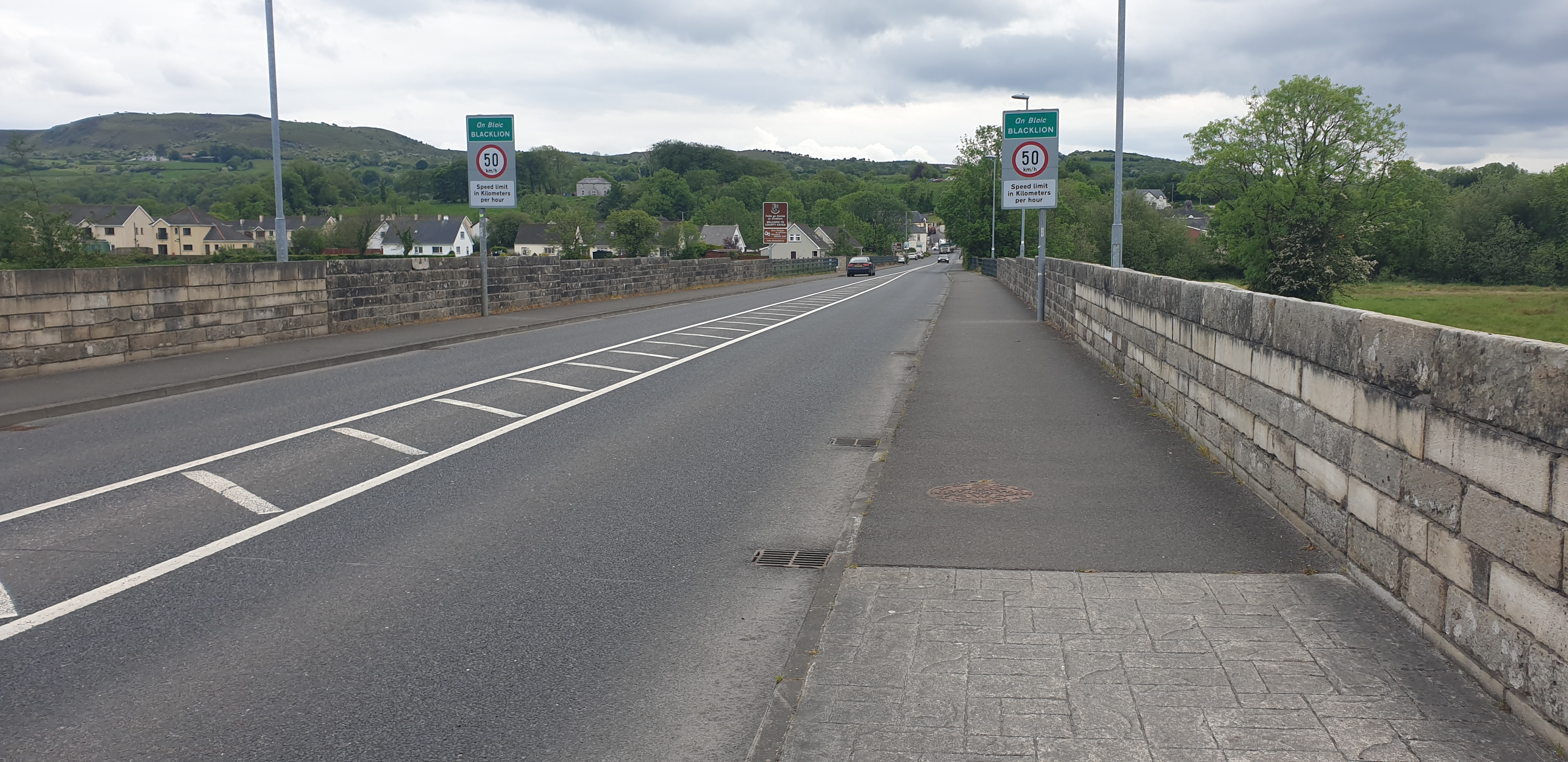
I am currently staying in a hotel on the border between Northern Ireland and Ireland. It is so close to the border it is called the Customs House. We have spent the last few days around the north of the island of Ireland, freely moving across the international border.
This is what the border looks like – no barriers, just drive across the bridge. The only difference is that in the north we have MPH in the south we have KPH:
And this is a typical border during the Troubles – long queues, cars being searched, random checkpoints, many weapons:

Brexiteers are quite happy that we will go backwards in time from the freedom of movement currently experienced to the dark days of the 1970s, 1980s and 1990s when everyone in Northern Ireland (and to a lesser extent the rest of the UK) lived in fear of extreme and unpredictable violence. After all they say, we survived the Second World War with the ‘Blitz Spirit’ so we can quite easily survive becoming a 3rd World nation respected by no one which no one listens to and which can only strike deals with countries that want to give us chlorinated chicken.
I presented a workshop in Omagh yesterday. In the UK, those of us who remember the Troubles remember this image from 1998:

The red car blew up moments after this photograph was taken. Fortunately the two people in the centre of the photo survived, but the photographer died, along with 28 other people (plus two who were in the womb of a woman expecting twins). Hundreds were injured.
This is the same scene today:

A perfectly normal scene in a perfectly normal town.
Northern Ireland is thriving. It has good roads, good infrastructure, friendly people, good food. If and when Brexit is forced upon us all this is threatened. Just the thought that it might go back to the awful situation of the Troubles should be enough for rational people to realise that Brexit must be rejected.
Of course, there are many other reasons Brexit should not happen, but it is worth pointing out the terrible danger that a part of the United Kingdom is in if we do leave the EU. The Troubles were not a low level conflict that could be ignored. The danger should be brought to the attention of the incompetent, ignorant, and utterly stupid people who are ‘running’ the UK at this time. Should I even mention the Irish Secretary, Karen Bradley, who admitted she knew little about the Troubles before being appointed to one of the most sensitive positions in the UK Government? How can someone apparently interested in politics – at least enough to stand for election as an MP – not understand at least the basics about the Troubles?
The political situation in the UK is the worst I have ever known. We have a Parliament with too many people who do not understand the UK Parliamentary system, a Government that is a parody of the term, very dangerous individuals such as Farage, Johnson, and Rees-Mogg who are either incredibly evil or incredibly stupid – or both. They all wish to destroy UK democracy. All our overseas friends, both in Europe and elsewhere, are in despair at the country they once looked up to as an exemplar of effective democracy.
If we are to survive the next months and years as a Parliamentary democracy, and if we are not to degenerate back into the violence of previous decades then Brexit has to be stopped. There is no alternative but to stay in the European Union and, yes, to fight for any changes we want from within. Who was it who said ‘jaw jaw is better than war war’- oh yes, that person well respected by the idiots listed above – Winston Churchill, who also suggested we should move towards a United States of Europe, because he had seen first hand what war does to people.
Why writing down your feelings and emotions is good for you.
Posted on May 7, 2019 Leave a Comment
Writing can heal.
Andrea Kocurkova is one of my PhD students and is currently looking for participants for her study.

You have probably heard of the health benefits of undertaking activities like yoga, meditation or psychotherapy. But these activities do not help everyone. We all have different needs, preferences and interests. I would like to talk about a method you might be acquainted with – writing.
Some of us keep a personal diary to record our own daily life events. For some, writing down our activities is a cathartic process that can enable us to make sense of what has happened in our lives.
Writing is not a gender or age specific technique. For some, writing can help the person to move on from a potentially stressful or traumatic event like a family bereavement, divorce, car accident or loss of one’s job.
After experiencing stressful event we may have difficulty sleeping because we are thinking about it all night or we may be distracted from daily activities such as work or socialising. This is basically multi-tasking and when we multi-task, we often do less well because we are not paying full attention to what we are doing.
Through a technique known as expressive writing we can take a step away from what is troubling us and evaluate what has happened. We create a narrative we can ‘see’.
Expressive writing enables us to become active participants in our own stories and gives us a stronger sense of self-control. Traumatic and stressful experiences can make our stories fractured and less coherent. With concrete sets of reinforced instructions, the stories we then create through expressive writing can help structure and give coherence to these stories, thus making the experience more manageable.
A growing body of academic evidence supports this approach. Expressive writing has now been linked to improved physical and mental health, with studies identifying enhanced recovery after traumatic experiences and improved sleeping patterns by participants who undertook this technique.
The question remains, how does writing actually help?
Expressive writing works because it enables us to actively think about and express our emotions . Narrating and organising experiences can give additional meaning to traumatic or stressful events.
Grammar and spelling are irrelevant, the process encourages us to be free to write in whatever style feels most authentic and natural. You do not get graded on what you write. Opening up about a story in a private way, through writing, can also allow us to open up about the story and talk to others, though the process itself is not about sharing with others.
You might think you have no time to write. This is where you are mistaken. You can and should find time for yourself, regardless if it is for exercise, meditation or reflection through writing. If you do not have 20 minutes, start small with 5 minutes once or twice a day and gradually increase the time.
As you write, you try to make sense of the world around you and your inner world. You try to understand what you feel, thus create a stronger connection with yourself. Knowing yourself is a key component in maintaining relationships with others.
Even expressively writing about others can make it feel like they are with you at that moment. That is why writing about something negative can make you feel sad for an hour or two. Imagine watching a sad movie, you feel connected to the protagonist or develop this connection with an antagonist. Nevertheless, after the movie ends you feel sadder, and perhaps wiser.
With expressive writing you are writing for yourself, no one else. It helps you deal with whatever thoughts or feelings you might have.
Researchers at the University of Nottingham are currently looking into effects of expressive writing on traumatic and stressful experiences within the local communities. If you would like to know more or would like to take part contact Andrea Kocurkova at andrea.kocurkova@nottingham.ac.uk
 Dr Nigel Hunt