The impossibility of Brexit
Posted on May 23, 2019 Leave a Comment
In the UK we like to think that the Northern Ireland Conflict – ‘The Troubles’ – was not really a war, but more of a low level conflict that we could and can sweep under the carpet. The truth is that during the 30 or so years of the conflict around 3,500 people died. This is with a population of under 2 million in Northern IReland. Accepting that some of the deaths occured in other parts of the UK and elsewhere, and that the following is just a rough estimate, if we extrapolate to consider a similar level of conflict in England that would mean around 130,000 deaths over that same period. With that many deaths we would not consider it to be a low level conflict but a serious war where we would probably call on the UN to intervene.
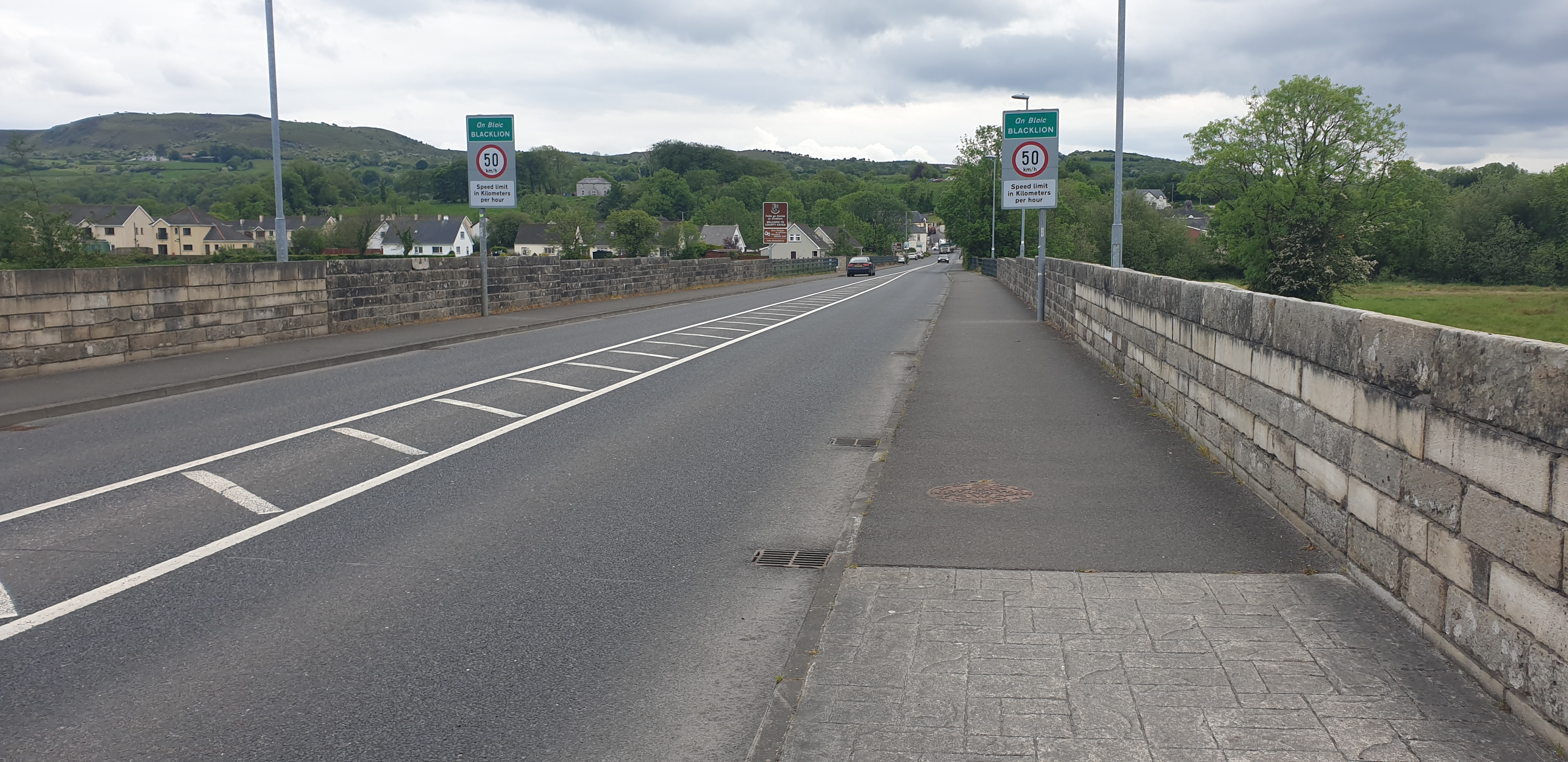
I am currently staying in a hotel on the border between Northern Ireland and Ireland. It is so close to the border it is called the Customs House. We have spent the last few days around the north of the island of Ireland, freely moving across the international border.
This is what the border looks like – no barriers, just drive across the bridge. The only difference is that in the north we have MPH in the south we have KPH:
And this is a typical border during the Troubles – long queues, cars being searched, random checkpoints, many weapons:

Brexiteers are quite happy that we will go backwards in time from the freedom of movement currently experienced to the dark days of the 1970s, 1980s and 1990s when everyone in Northern Ireland (and to a lesser extent the rest of the UK) lived in fear of extreme and unpredictable violence. After all they say, we survived the Second World War with the ‘Blitz Spirit’ so we can quite easily survive becoming a 3rd World nation respected by no one which no one listens to and which can only strike deals with countries that want to give us chlorinated chicken.
I presented a workshop in Omagh yesterday. In the UK, those of us who remember the Troubles remember this image from 1998:

The red car blew up moments after this photograph was taken. Fortunately the two people in the centre of the photo survived, but the photographer died, along with 28 other people (plus two who were in the womb of a woman expecting twins). Hundreds were injured.
This is the same scene today:

A perfectly normal scene in a perfectly normal town.
Northern Ireland is thriving. It has good roads, good infrastructure, friendly people, good food. If and when Brexit is forced upon us all this is threatened. Just the thought that it might go back to the awful situation of the Troubles should be enough for rational people to realise that Brexit must be rejected.
Of course, there are many other reasons Brexit should not happen, but it is worth pointing out the terrible danger that a part of the United Kingdom is in if we do leave the EU. The Troubles were not a low level conflict that could be ignored. The danger should be brought to the attention of the incompetent, ignorant, and utterly stupid people who are ‘running’ the UK at this time. Should I even mention the Irish Secretary, Karen Bradley, who admitted she knew little about the Troubles before being appointed to one of the most sensitive positions in the UK Government? How can someone apparently interested in politics – at least enough to stand for election as an MP – not understand at least the basics about the Troubles?
The political situation in the UK is the worst I have ever known. We have a Parliament with too many people who do not understand the UK Parliamentary system, a Government that is a parody of the term, very dangerous individuals such as Farage, Johnson, and Rees-Mogg who are either incredibly evil or incredibly stupid – or both. They all wish to destroy UK democracy. All our overseas friends, both in Europe and elsewhere, are in despair at the country they once looked up to as an exemplar of effective democracy.
If we are to survive the next months and years as a Parliamentary democracy, and if we are not to degenerate back into the violence of previous decades then Brexit has to be stopped. There is no alternative but to stay in the European Union and, yes, to fight for any changes we want from within. Who was it who said ‘jaw jaw is better than war war’- oh yes, that person well respected by the idiots listed above – Winston Churchill, who also suggested we should move towards a United States of Europe, because he had seen first hand what war does to people.
Why writing down your feelings and emotions is good for you.
Posted on May 7, 2019 Leave a Comment
Writing can heal.
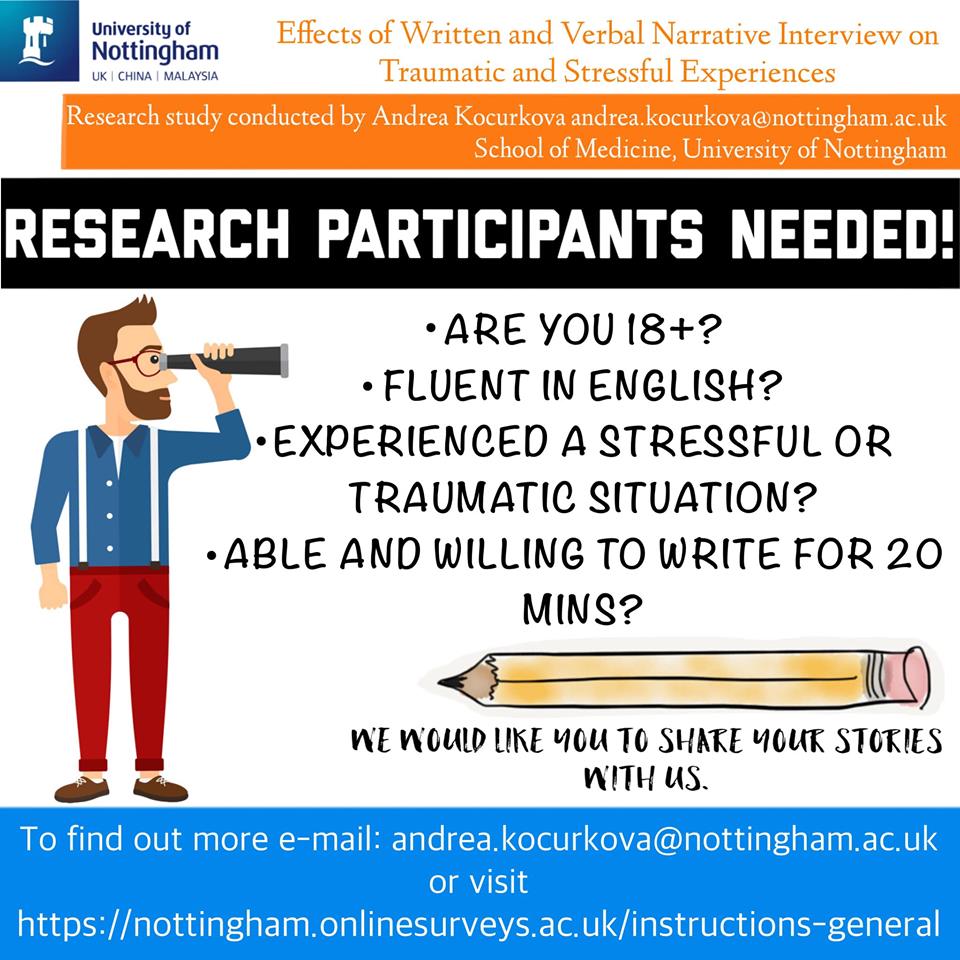
Andrea Kocurkova is one of my PhD students and is currently looking for participants for her study.
You have probably heard of the health benefits of undertaking activities like yoga, meditation or psychotherapy. But these activities do not help everyone. We all have different needs, preferences and interests. I would like to talk about a method you might be acquainted with – writing.
Some of us keep a personal diary to record our own daily life events. For some, writing down our activities is a cathartic process that can enable us to make sense of what has happened in our lives.
Writing is not a gender or age specific technique. For some, writing can help the person to move on from a potentially stressful or traumatic event like a family bereavement, divorce, car accident or loss of one’s job.
After experiencing stressful event we may have difficulty sleeping because we are thinking about it all night or we may be distracted from daily activities such as work or socialising. This is basically multi-tasking and when we multi-task, we often do less well because we are not paying full attention to what we are doing.
Through a technique known as expressive writing we can take a step away from what is troubling us and evaluate what has happened. We create a narrative we can ‘see’.
Expressive writing enables us to become active participants in our own stories and gives us a stronger sense of self-control. Traumatic and stressful experiences can make our stories fractured and less coherent. With concrete sets of reinforced instructions, the stories we then create through expressive writing can help structure and give coherence to these stories, thus making the experience more manageable.
A growing body of academic evidence supports this approach. Expressive writing has now been linked to improved physical and mental health, with studies identifying enhanced recovery after traumatic experiences and improved sleeping patterns by participants who undertook this technique.
The question remains, how does writing actually help?
Expressive writing works because it enables us to actively think about and express our emotions . Narrating and organising experiences can give additional meaning to traumatic or stressful events.
Grammar and spelling are irrelevant, the process encourages us to be free to write in whatever style feels most authentic and natural. You do not get graded on what you write. Opening up about a story in a private way, through writing, can also allow us to open up about the story and talk to others, though the process itself is not about sharing with others.
You might think you have no time to write. This is where you are mistaken. You can and should find time for yourself, regardless if it is for exercise, meditation or reflection through writing. If you do not have 20 minutes, start small with 5 minutes once or twice a day and gradually increase the time.
As you write, you try to make sense of the world around you and your inner world. You try to understand what you feel, thus create a stronger connection with yourself. Knowing yourself is a key component in maintaining relationships with others.
Even expressively writing about others can make it feel like they are with you at that moment. That is why writing about something negative can make you feel sad for an hour or two. Imagine watching a sad movie, you feel connected to the protagonist or develop this connection with an antagonist. Nevertheless, after the movie ends you feel sadder, and perhaps wiser.
With expressive writing you are writing for yourself, no one else. It helps you deal with whatever thoughts or feelings you might have.
Researchers at the University of Nottingham are currently looking into effects of expressive writing on traumatic and stressful experiences within the local communities. If you would like to know more or would like to take part contact Andrea Kocurkova at andrea.kocurkova@nottingham.ac.uk
Wingfield Manor
Posted on April 24, 2019 Leave a Comment
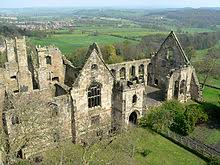
Wingfield Manor is one of the greatest unknown manor houses in England. It was built in the middle of the 15th Century and now lies ruined at the top of a hill in South Wingfield, Derbyshire. It was the model for the later (and larger) Hampton Court Palace. It is built of local stone, and retains numerous interesting architectural features, such as the Great Hall, the kitchens, and the tower which used to contain an early flushing toilet (basically people sat on pieces of overhanginging wood and did their business. A cistern at the top of the tower would flood the area and everything would wash into the old Norman moat).
The manor was built on the remains of a Norman castle, about which we know very little. Part of the moat remains around the outer walls.
The manor is linked with several characters and stories of national interest. It was built for Ralph Lord Cromwell who as a young man had fought at Agincourt with Henry V. He played an important role under Henry VI as treasurer, Privy Councillor and Chamberlain of the household, doing very well for himself financially out of these activities. He died in 1456 and the manor was bought by John Talbot, 2nd Earl of Shrewsbury, whose father had recently died commanding the english troops who died losing the Battle of Castilion, the final battle of the 100 Years War, which saw the French victorious.
The manor stayed in the same family for some time. In the 1580s Mary Queen of Scots was a prisoner here on several occasions, and the Babington Plot, which was one of the events that led to her execution, was hatched around here. Young Anthony Babington, a Catholic from the hamlet of Dethick just over the hill from Wingfield, worked for George Talbot, 6th Earl of Shrewsbury – husband of Bess of Hardwick, the second most powerful woman in England at that time – and it is rumoured Babington developed an attachment for Mary. Whatever the case, they were both executed.
The 7th Earl of Shrewsbury had no sons, only daughters, and so through marriage the manor came into the hands of the Duke of Norfolk. At the start of the Civil War in 1642 he was a supporter of the Parliamentary cause. The manor itself was occupied at first by Parliamentary forces, but after a short siege it was taken by the Royalists who, perhaps because the manor is situated near important north-south and east-west roads, caused some trouble in the local area. Colonel Gell, in charge of the Parliamentary forces of Derbyshire, besieged the manor, but had to march to Marston Moor to help defeat the Royalists there. On their return to Wingfield they quickly restarted the siege and took the manor by bombardment and infantry attack. The commander of the Royalist forces, Colonel Dalby, attempted to get away by disguising himself as an ordinary soldier, but he was recognised by a deserter and shot in the face as he walked out of the gate. There are traces of the trenches and gun emplacements on the hillside outside the manor, the half moon battery by the main gate being the most prominent, but these are mainly overgrown and neglected.
After the war the manor was ordered to be ruined by order of Oliver Cromwell and Parliament – built by one Cromwell, destroyed by another, apparently unrelated Cromwell – so that it could never be used in defence against the state.
At this point we can forget wars and lords as the manor was bought from Norfolk by his steward Immanuel Halton, a keen astronomer and mathematician. He rebuilt part of the manor, basically a house inside what was the great hall. He heavily influenced the young local lad John Flamsteed – from nearby Denby – getting him interested in astronomy, so much so that Flamsteed became the first astronomer royal, helping found the Royal Observatory at Greenwich, London.
A later Halton let the manor fall into ruin when he had Wingfield Hall built across the valley. He even got the builders to make use of the stone from the manor.
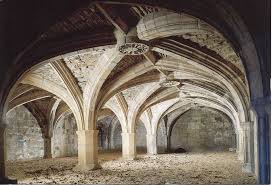
The manor is still occupied. In the middle range between the north and south courtyards there is a farmhouse, occupied as such for several hundred years. The south courtyard is the farmyard, and there are various farm buildings dotted around.
The manor itself is in the hands of English Heritage. At the time of writing it is closed for refurbishment. Until last year it was open only the first Saturday of the month during the summer – and then only with a guided tour which omits many of the interesting elements of the story, focusing largely on Mary Queen of Scots rather than war and astronomy.
A solution for Brexit?
Posted on April 4, 2019 Leave a Comment

Among all the ideas about what our disunited kingdom should do regarding Brexit, cancel Article 50, do a hard Brexit, or find a third way, I believe I have a solution that could work for everyone. At the moment none of the solutions work for a majority of people. Whatever happens a large proportion of the population is likely to be unhappy. If we leave the EU then a large part of the population will feel torn asunder from the community they have grown to love. If we remain in the EU then we are threatened by violence from the nastier parts of the anti-EU population. Yes, these two groups do have different general characteristics (though there are nice and nasty people on each side from the evidence there are more on the Brexit side).
Here’s a solution
- Revoke Article 50. We clearly cannot come up with an acceptable solution in the short time remaining before we leave or before we go begging to the EUU for another extension. This cannot be sorted out in days or weeks.
- Tell those people who wish to leave the EU that they have until one year before the next EU elections (ie 2023) to come up with an acceptable option for leaving (whether hard, soft or something inbetween). Like it or not they will have to talk to the EU and come up with a solution that works for the EU too. Yes we have a Euro election later this month, yes we stay in the EU for at least the next five years, but it is important to get this right.
- One year before the next EU elections we have another referendum – I hate referenda as most of us, myself included, are not qualified to vote on complex issues such as leaving the EU as we don’t understand the consequences, but I don’t think there is another choice on this occasion. The options will be the deal the Brexiters come up with versus remaining in the EU. As it is a significant constitutional change then the Brexit option must be supported by a real majority of the voters, either over 50% of the whole electorate or 60% of those who vote. There is a significant group of people who don’t care and we have to allow for that. They should not be contributing to a situation that could lead to significant constitutional change. If the Brexiters do not come up with a solution there is no referendum. The leave option must be presented with a degree of honesty that was missing from their arguments in 2016, outlining the potential consequences of leaving, both positive (should they find any. I haven’t seen any in the last few years) and negative.
- If the vote is to remain, then it is over. No more trying to leave for at least 10 years (perhaps the EU could legislate for that, an addendum to Article 50). If the vote is to leave then as the EU has already agreed to the plan it can be put to Parliament for legislation to leave before the next EU elections will be due.
That is it. The simplest solution to a difficult problem. The Brexiters will moan about having to stay in the EU for another few years, but at least we will be in a position to have a reasoned argument (if such is possible) about the options through this period.
Of course I don’t want to leave. I believe strongly that once the public are shown what the alternatives are they will opt to remain. Whether or not the process destroys the Tory Party, the Labour Party or both is a problem for those parties. At the moment they – particularly the former – are tearing themselves apart trying to come up with something that will appeal to everyone. That is not going to happen. Also, with such huge constitutional changes we have to take our time over the debate. Finally, anyone who claims that it is not democratic to have another vote is plain wrong. We have democratic votes every few years to choose our government. We have the right to change our minds.

NET is NICE
Posted on February 25, 2019 Leave a Comment
Some of the work of our research team has been used as evidence for the latest update of the NICE guidelines for the treatment of PTSD. Narrative Exposure Therapy (NET) has now been included as an acceptable treatment for PTSD (NICE, Dec 2018), after several years of researchers and clinicians arguing for its inclusion. This is good news for those who will benefit from NET.
Three of our articles were used for the evidence:
- Alghamdi, M., Hunt, N. & Thomas, S. (2015). The Effectiveness of Narrative Exposure Therapy with Traumatised Fire-fighters in Saudi Arabia: A Randomised Controlled Study. Behaviour Research and Therapy, 66, 64-71.
- Zang, Y., Hunt, N. & Cox, T. (2014). Adapting Narrative Exposure Therapy for Chinese earthquake survivors: A pilot randomised controlled feasibility study. BMC Psychiatry, 14, 262.
- Zang, Y., Hunt, N. & Cox, T. (2013). A randomised controlled pilot study: The effectiveness of narrative exposure therapy with adult survivors of the Sichuan Earthquake. BMC Psychiatry, 13(1), 41.
These articles are based on the studies of two of my PhD students, Yinyin Zang and Mohammed Alghamdi.
Yinyin was the first of our team to use NET. We were studying the survivors of the Sichuan earthquake in China which took place in 2008. Over 42,000 people were killed, many more were injured and made homeless. Our study was initially intended to obtain quantitative data regarding the psychological impact of the earthquake, but we quickly found that people wanted to tell their stories, so Yinyin altered her PhD to incorporate NET, which was at the time a relatively new treatment. She initially used a four session treatment plan with people who were showing relatively high levels of psychological symptomatology. This worked very well. Using a waiting list design all 22 participants showed significant reduction of symptoms of PTSD, depression and anxiety. Indeed, the procedure worked so well we tried a two session NET, comparing it to the four session procedure and found it worked just as well. We were only able to do a three month follow up, but symptoms remained low in all groups.
Mohammed studied firefighters in Saudi Arabia. They were all treated using NET and their symptom scores reduced, in a similar but not as dramatic way as for the earthquake survivors. The follow up, though, showed some differences. Many of the firefighters showed increased scores after several months. On closer inspection – using an interview procedure – it turned out that many of them had experienced very stressful events in the interim, and it may have been this that caused the increase in scores. They did suggest that a regular ‘top-up’ NET might be helpful, but we did not have the resources for that.
Along similar lines, Ashraf Al-Hadethe, another one of my PhD students, conducted a NET study with Iraqi civilians in Baghdad at a time when there was still a lot of violence in the city. While the participants – again all with high symptom levels – showed some benefit from NET, they very quickly lost the benefits because of the continued violence.
These two studies, on Saudi firefighters and Iraqi civilians, may show that while NET has significant benefits for people who are in the post-trauma phase, ie they are not experiencing continuing problems, the procedure may not be protective for future stressful or traumatic events. Does it focus too much on past events and not consider the necessary tools to provide protection against future events? This clearly needs further research.
The China study, along with the many hundreds of other NET studies, clearly shows that there are benefits to NET, and people with PTSD and related problems are likely to experience significant benefits. Given the storied nature of NET it is likely that some people who are unable or unwilling to undergo a full course of CBT may find NET more acceptable, as it has the storied component – and we naturally get satisfaction from telling stories, even traumatic ones if their is suitable support.

